
Restroom cleaning · Wichita
Restaurant Restroom Cleaning
Keep guest and employee restrooms clean, stocked, and ready for every shift with recurring service scheduled around your operating hours.
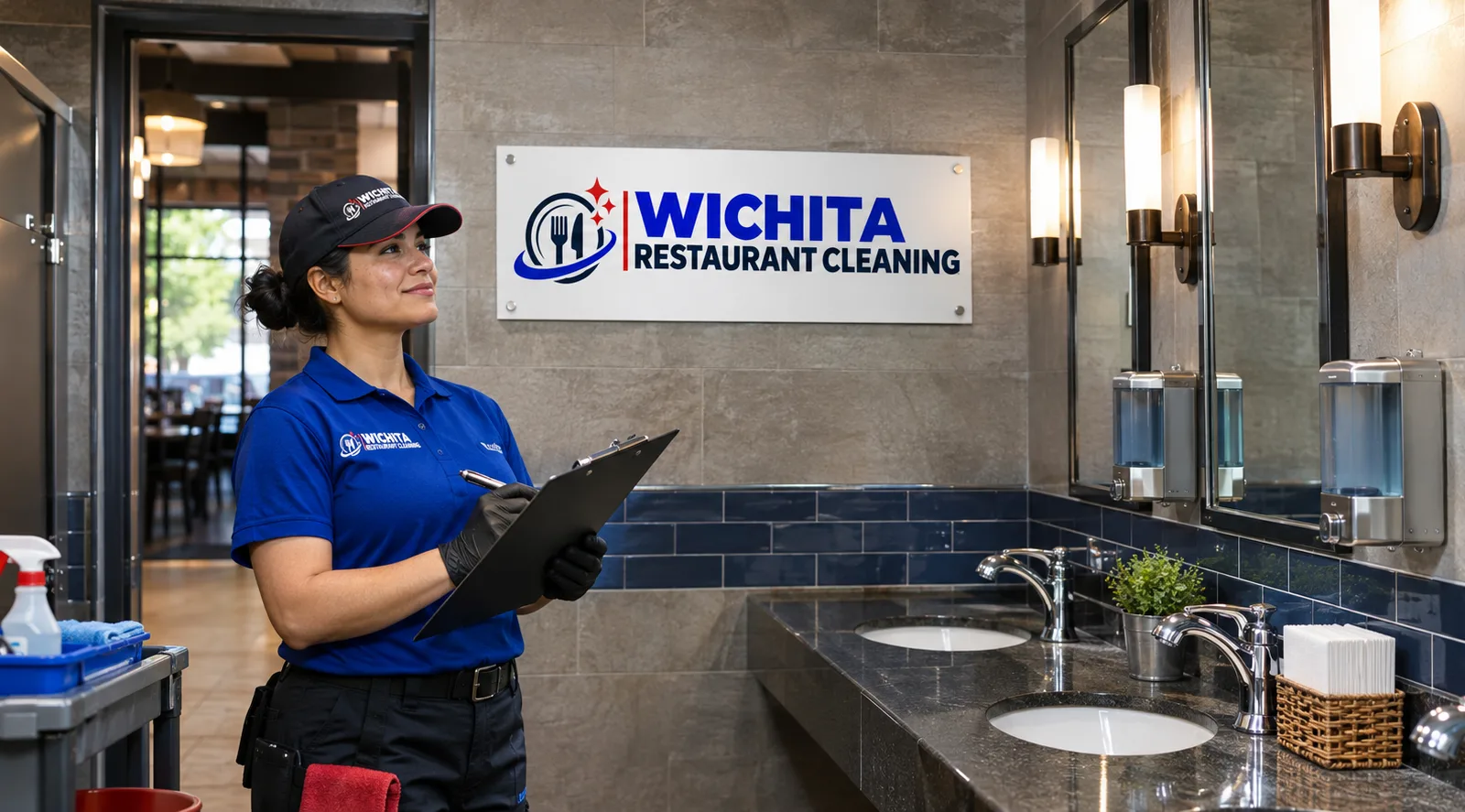
A Clean Restroom Supports the Entire Guest Experience
Restaurant Restroom Cleaning requires more than emptying waste containers and wiping visible surfaces. Guests notice odors, soap dispensers, floors, mirrors, partitions, and fixtures. Employees need sanitary facilities that remain usable throughout a busy service period. A written cleaning scope brings those details into one repeatable routine.
Wichita Restaurant Cleaning provides recurring restroom care for dining rooms, bars, cafés, quick-service restaurants, and other food-service operations. Our team at a professional restaurant company in Wichita builds the work around your hours, restroom layout, traffic level, and closing procedures. Service may be scheduled daily, nightly, or overnight so the restroom can be cleaned after guests leave and prepared before the next opening.
Central Wichita restaurants may need work coordinated around downtown operating hours and event traffic near INTRUST Bank Arena. Old Town dining and nightlife locations often need late access after final close, while restaurants in Bradley Fair and along the Rock Road commercial corridor may require consistent multi-day schedules. In each setting, access instructions, alarm procedures, supply storage, and completion checks should be settled before recurring work begins.
Included restroom tasks
What Restaurant Restroom Cleaning Covers
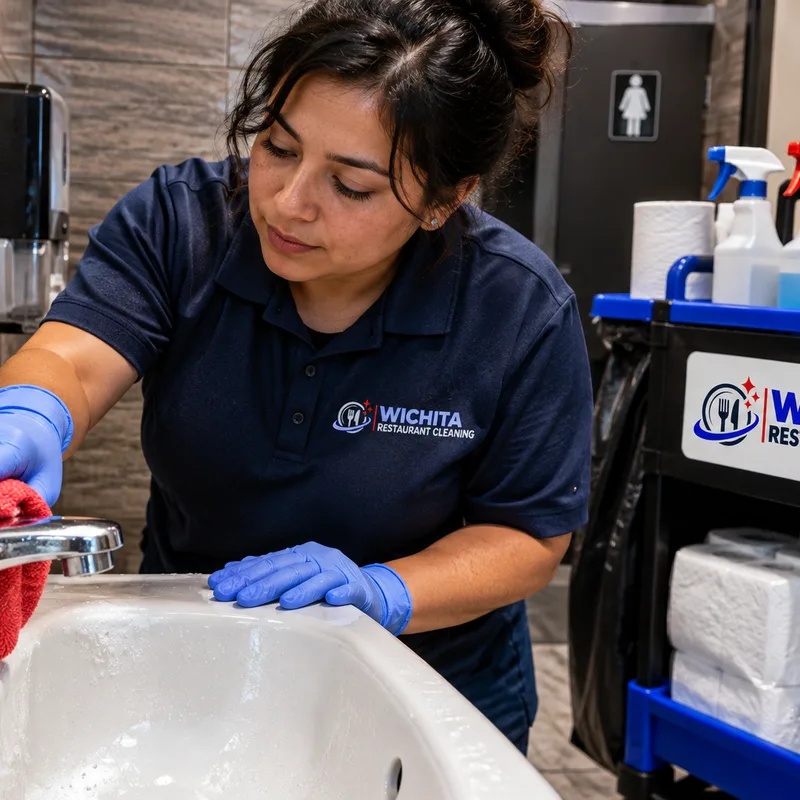
A restroom cleaning visit starts with removal of loose waste and visible debris. The cleaner then addresses toilets, urinals, sinks, faucets, counters, mirrors, dispensers, partitions, doors, handles, and other frequent-touch points included in the scope. Floors are swept or dust mopped before damp mopping so grit is not spread through the room.
Fixtures need the correct product and enough dwell time, which is the period a disinfectant must remain visibly wet according to its label. Cleaning removes soil first. Disinfection follows on compatible, precleaned surfaces. Products should never be mixed, and label directions determine dilution, contact time, required protective equipment, and surface suitability.
The routine can also include refilling customer-provided toilet tissue, hand towels, soap, sanitary-product receptacle liners, and air-care supplies. Low-stock items and maintenance concerns such as a leaking fixture, loose dispenser, damaged partition latch, or recurring drain odor can be reported to management. Plumbing repair and pest control remain separate from janitorial cleaning.
Cleaning frequency options
Recurring Restaurant Janitorial Cleaning Built Around Operations
Daily Restaurant Cleaning
Daily service suits high-traffic dining rooms and restrooms that need a full reset after each operating day. The scope can include waste removal, fixture cleaning, touch-point disinfection, floor care, odor checks, and restocking.
Restaurant Night Cleaning
Night service begins after the dining room closes or during a quiet period set by management. Clear key, alarm, lock-up, and communication procedures help the cleaner work without interrupting staff closeout duties.
Overnight Restaurant Cleaning
Overnight service can place restroom work between closing and opening shifts. It also gives damp floors time to dry before employees and guests return, subject to ventilation, floor condition, and the products used.
Quality Checks
A restroom-specific checklist makes recurring work measurable. Supervisory review can track fixtures, dispensers, floors, waste containers, odors, touch points, and any exceptions that need follow-up.
Scheduling process
How Recurring Restaurant Cleaning Starts
Walk Through the Restrooms
We review the number and type of fixtures, floor and wall materials, partition condition, dispenser setup, storage access, and current problem areas. Traffic patterns and operating hours help establish service frequency.
Set the Written Scope
The proposal identifies visit frequency, included tasks, responsibility for consumable supplies, access procedures, and any periodic work. This keeps expectations clear for restaurant management and the cleaning crew.
Schedule Around Service Hours
Daily, nightly, or overnight arrival windows are coordinated with closing managers and opening staff. Keys, alarm instructions, restricted areas, and lock-up requirements are documented before the first visit.
Clean and Inspect
The assigned routine is completed in a consistent order, followed by a visual check of fixtures, mirrors, dispensers, waste containers, floors, and odors. Maintenance concerns or supply shortages are reported through the agreed channel.
Adjust for Actual Use
Traffic can change with weekends, local events, patio season, and holiday periods. The frequency or task list can be revised when restroom use, soil load, or operating hours change.
Local operating fit
Why Wichita Restaurants Need a Flexible Schedule
Restaurant traffic does not stay uniform throughout the week. Downtown event nights can compress heavy restroom use into a short period. Old Town bars and late-night restaurants may need cleaning after employees finish closing duties, while east-side dining locations can have steady lunch and dinner turnover. A restaurant janitorial company should account for those patterns rather than assigning the same routine to every location.
Kansas weather also reaches the restroom floor. Rain and winter precipitation can bring in moisture, grit, and deicing residue on guests' shoes. Windy, dry periods can increase tracked dust. Entry matting helps, but restroom floors still need soil removal before mopping. Using a wet-floor sign during service and allowing the floor to dry before opening reduces avoidable slip exposure.
Daily cleaning can be paired with periodic detail work when ordinary visits no longer remove buildup. Examples include machine scrubbing suitable hard flooring, cleaning grout lines, washing partitions more thoroughly, and removing mineral residue with a product approved for the fixture. The exact method depends on the floor finish, grout condition, metal type, and manufacturer instructions.
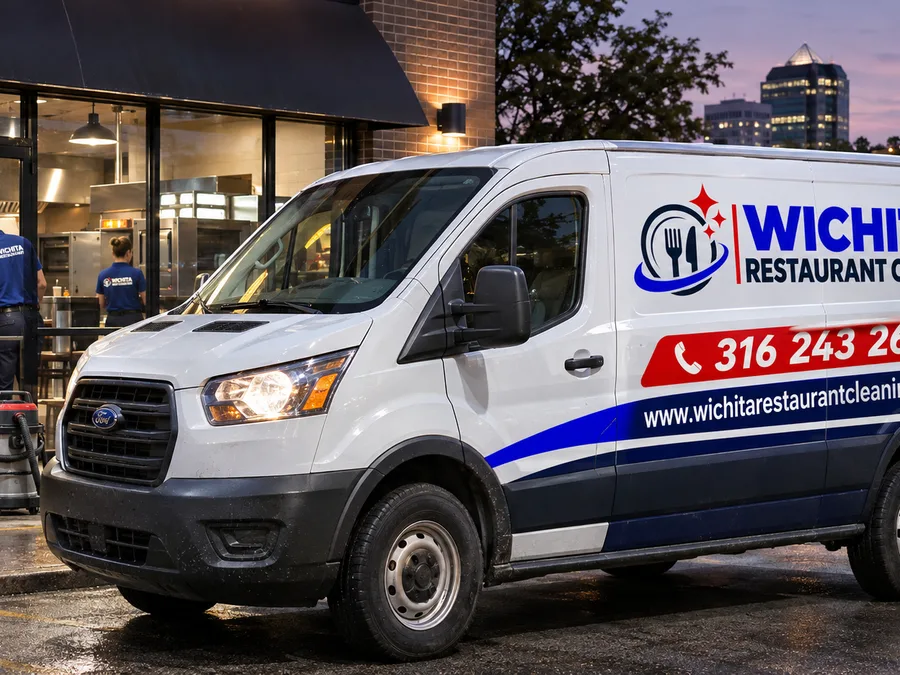
Trace Odors to Their Source
Persistent restroom odor is usually a condition to investigate, not something to cover with fragrance. The first check should include waste receptacles, floor edges, the area around toilet bases and urinals, partitions, grout, drains, and dispensers. Organic soil left in hard-to-reach areas can return quickly after a superficial wipe. A dry drain trap, plumbing leak, or sewer-gas concern needs maintenance rather than additional deodorizer.
Match Floor Care to the Material
Floor care should match the material. Ceramic or porcelain tile and sealed grout tolerate different methods than resilient flooring or natural stone. Excess chemical, dirty mop solution, and incomplete soil pickup can leave a sticky film that attracts more dirt. Color-coded cloths and tools can also help separate restroom work from other cleaning zones and reduce cross-contamination.
Clean Touch Points Without Damaging Finishes
Frequent-touch points include door pulls, push plates, faucet handles, flush controls, stall latches, dispenser levers, and accessible grab bars. These surfaces still need compatibility checks. Abrasive pads or harsh chemicals can damage plated fixtures, mirrors, plastic dispensers, and finished partitions. A reliable Restaurant Restroom Cleaning plan identifies both the task and the safe method.
Get a written restroom cleaning scope that fits your operating hours, fixture count, traffic, access requirements, and preferred daily, nightly, or overnight schedule.
Call for a Free QuoteScope and scheduling
Restaurant Restroom Cleaning Questions
How much do restaurant janitorial services in Wichita cost?
Pricing depends on restroom size, fixture count, service frequency, access window, soil level, and the tasks included. A small single-restroom location generally takes less labor than a late-night venue with multiple stalls, urinals, heavy weekend traffic, and frequent restocking. Consumables, periodic floor work, and unusual access requirements should be identified separately. An on-site walkthrough is the practical way to confirm a written price.
Can you provide nightly restaurant cleaning in Wichita after closing?
Nightly work can be scheduled after closing when the restaurant provides a workable access and lock-up plan. The start window should account for guests leaving, employee closeout duties, alarms, keys, and the time needed for floors to dry. Old Town and downtown locations may need later arrival windows on event nights or weekends.
Is overnight restaurant cleaning available every day?
A daily overnight schedule can be arranged when staffing, access, and the agreed service window support it. Restaurants should identify holiday closures, changing weekend hours, alarm contacts, and any nights when other contractors use the building. The final schedule is confirmed during the walkthrough and proposal process.
Are soap, toilet tissue, and paper towels included?
Consumable supplies are included only when the written agreement says who purchases and stocks them. Some restaurants provide their preferred products and ask the cleaning crew to refill dispensers. Others want supply management added to the scope. Dispenser model numbers and storage capacity should be documented because refills are not universally interchangeable.
Can recurring restaurant cleaning address persistent restroom odors?
Recurring cleaning can correct odors caused by removable soil, dirty waste containers, neglected floor edges, or buildup around fixtures. Odors linked to dry traps, damaged seals, leaks, sewer gas, or pest activity require the appropriate maintenance provider. The cleaning crew can report those conditions, but masking them with fragrance does not correct the source.
How long does it take to begin recurring restaurant cleaning?
The start date depends on walkthrough availability, scope approval, access setup, supply needs, and the requested schedule. A straightforward restroom assignment can be organized faster than a multi-restroom location requiring overnight access and detailed security procedures. The proposed start date and first-service expectations should be confirmed in writing.
How do you prevent cross-contamination during restaurant restroom cleaning?
A sound process uses restroom-designated tools, clean cloth rotation, proper glove practices, and an order of work that keeps cleaner surfaces separate from toilets and urinals. Color coding can identify restroom cloths, mop equipment, or buckets. Chemicals are used according to label directions, including dilution and dwell time, and tools should not move into food-preparation areas.
Build your restroom scope
Set Up Reliable Restaurant Restroom Cleaning
Tell Wichita Restaurant Cleaning about your restroom layout, hours, current trouble spots, and preferred service frequency. We will help define a practical scope for daily, nightly, or overnight care.