
Kitchen floor cleaning · Wichita
Commercial Kitchen Floor Cleaning in Wichita
Remove grease, embedded soil and grout buildup with a cleaning plan fitted to your flooring, kitchen schedule and food-service operation.
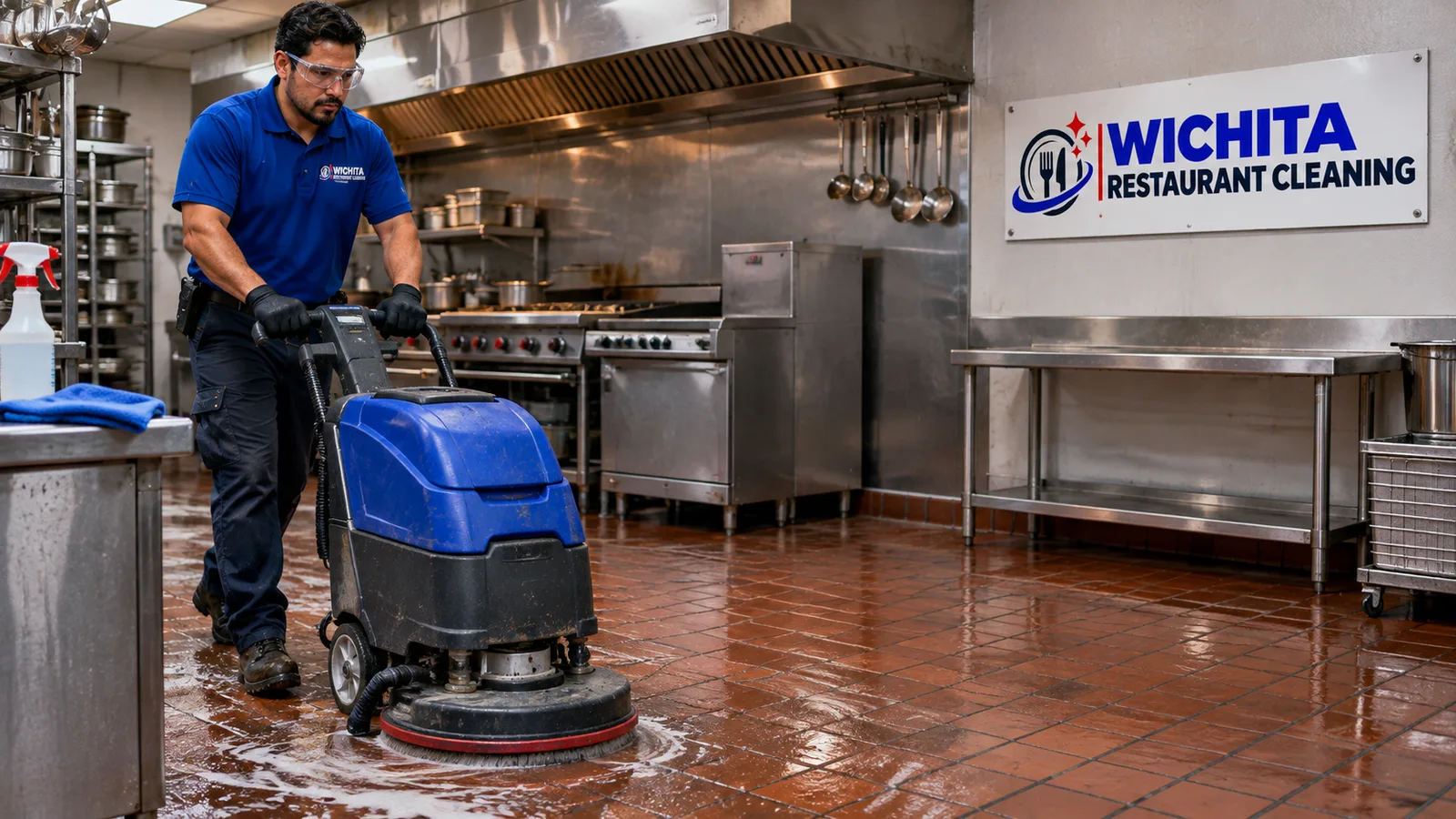
A Deeper Clean for Hardworking Kitchen Floors
Commercial Kitchen Floor Cleaning targets the grease film, tracked-in soil and compacted residue that routine mopping can leave on tile and grout. Wichita Restaurant Cleaning assesses the floor material, buildup and access before selecting the cleaner, dwell time, agitation method and recovery process.
We plan commercial kitchen floor cleaning around prep, service and closing schedules, and Wichita's restaurant specialists account for equipment lines, floor drains, corners and other hard-to-reach areas. The goal is a consistent clean across the usable floor, including grout joints and edges where soil tends to collect.
Service is available for independent restaurants, bars, cafeterias, bakeries, food-production areas and other commercial kitchens. Operations near Old Town may need work timed around late closing hours, while restaurants in Delano often have compact kitchens where equipment access must be planned carefully. In east Wichita and along Rock Road, larger dining operations may require zone-by-zone cleaning so essential areas remain available.
Surface-specific methods
Kitchen Floor Degreasing Matched to the Surface
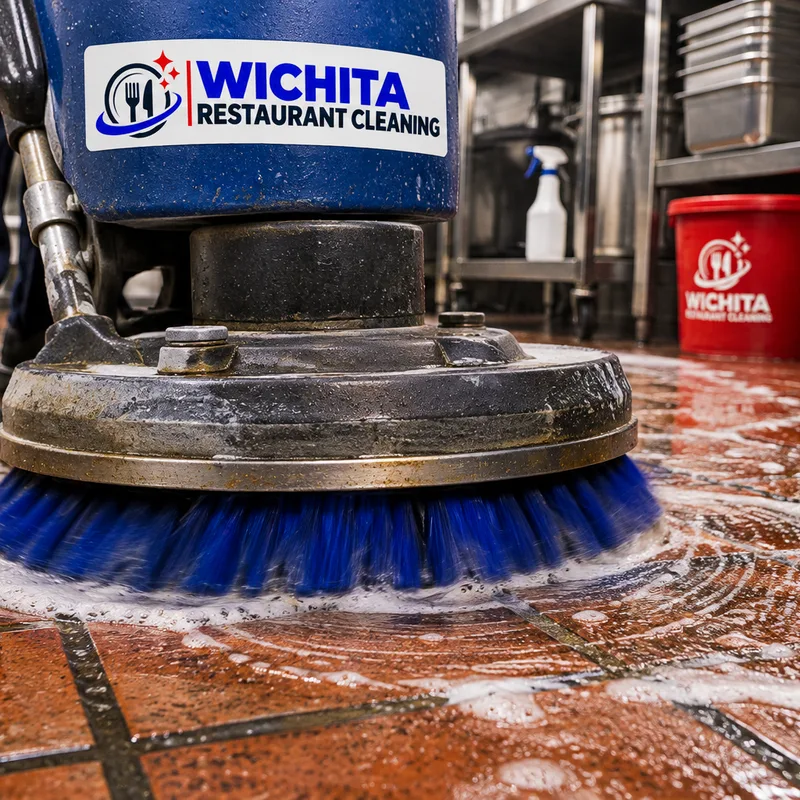
Effective kitchen floor degreasing starts with chemistry and contact time, not simply more water or pressure. A suitable degreaser is applied at the proper dilution and allowed to dwell so it can loosen oily residue. Mechanical agitation then works the textured surface and grout joints. The suspended soil and cleaning solution must be recovered rather than pushed toward edges or left to dry on the floor.
Quarry tile is common in commercial food-service areas because it tolerates demanding use, but its textured face and cementitious grout can retain greasy residue. Ceramic and porcelain tile may require different pad or brush choices. Epoxy grout is less porous than cementitious grout, although grease can still accumulate on its surface. Sealed concrete and resinous floors also need compatible products to avoid damaging the finish.
Before broad application, the cleaning method should be tested in a small area. Nearby stainless steel, painted curbs, rubber base and aluminum components may react differently to strong alkaline or acidic products. The floor is rinsed and recovered as needed, then allowed to dry before normal traffic resumes.
Cleaning targets
Restaurant Floor Cleaning Services
Restaurant Tile Cleaning
Surface-specific brushes, pads and cleaning agents address grease and soil without treating every tile floor the same.
Restaurant Grout Cleaning
Focused agitation works the recessed joints where mop water, food residue and greasy soil can settle.
Restaurant Floor Degreasing
Degreaser selection, dilution and dwell time are adjusted to the buildup and flooring rather than applied as a one-strength treatment.
Edges and Equipment Lines
Cleaning can include wall edges, corners, toe kicks and accessible areas around fixed equipment where routine tools may not reach.
Soil and Water Recovery
Loosened residue and cleaning solution are recovered with suitable equipment instead of being spread into adjacent areas.
Planned Maintenance
Recurring service can be scheduled according to kitchen volume, floor condition and the amount of grease generated by the menu and cooking line.
Floor cleaning process
How Commercial Kitchen Floor Cleaning Works
Floor and Access Review
We identify the flooring and grout, inspect buildup, note damaged areas and confirm which equipment can be moved safely by restaurant staff. We also account for drains, thresholds and the path needed to bring cleaning equipment into the kitchen.
Dry Soil and Loose Debris Removal
Loose food particles, grit and other debris are removed before wet cleaning. Skipping this step can turn dry soil into slurry and reduce the effectiveness of the degreaser.
Degreaser Application
A compatible product is mixed and applied to the working area. It receives enough dwell time to loosen the film while being kept from drying on the surface.
Mechanical Agitation
Commercial brushes or pads work the floor texture and grout joints. Detail tools are used around edges, corners and fixed equipment where larger machines cannot reach.
Recovery, Rinsing and Drying
The loosened soil and solution are extracted or otherwise recovered. The floor is rinsed when the product and surface call for it, then left ready to dry before kitchen traffic resumes.
Scheduling and access
Restaurant Floor Cleaning in Wichita That Fits the Shift
A kitchen floor cannot be treated like an empty lobby. Hot equipment must cool, food and utensils need protection, and staff require clear access for shutdown or opening duties. We confirm the working window, water access, equipment restrictions and drying expectations before service begins.
Wichita's seasonal weather also affects what reaches the floor. Rain and winter precipitation can increase tracked-in moisture and grit near receiving doors and employee entrances. Windy, dry periods can add fine outdoor soil. These materials combine with cooking oils and mop residue, so entry zones and routes between receiving, storage and the cook line may need extra attention.
In downtown Wichita, older commercial spaces may have narrow access routes or multiple transitions between flooring materials. Restaurants around Bradley Fair and other east-side commercial areas may have larger kitchen footprints and several production zones. A walkthrough establishes the practical scope rather than relying on square footage alone.
Flooring, Grout and Existing Finish
The appropriate plan depends on more than visible discoloration. Floor material, grout type, texture and previous coatings affect which products and tools can be used. The thickness and age of the grease film influence dwell time and whether repeated cleaning passes are appropriate. Access beneath movable equipment, the number of floor drains and the available shutdown window also shape the scope.
Buildup Versus Permanent Wear
A dark grout joint is not always dirty grout. Cementitious grout can stain permanently, and damaged grout may expose deeper discoloration that cleaning cannot repair. Likewise, worn tile, failed coatings and cracked transitions do not become new through cleaning. We identify these conditions during the review so the expected result is grounded in the floor's actual condition.
Kitchen Volume and Soil Load
For recurring commercial floor cleaning in Wichita, frequency is based on kitchen volume and soil load. Frying operations generally create a different grease burden than a bakery, café or cold-preparation kitchen. A practical maintenance plan addresses the areas that accumulate residue fastest without prescribing unnecessary work.
Get a written cleaning scope based on your floor material, kitchen access, buildup and available service window.
Call for a Free QuoteScope and preparation
Commercial Kitchen Floor Cleaning Questions
How much does restaurant floor cleaning in Wichita cost?
Pricing depends on cleanable square footage, floor condition, grease level, grout detail and access around equipment. A compact kitchen with light film requires less labor and solution than a large cook line with heavy accumulation and extensive grout. After reviewing the Wichita location and working window, Wichita Restaurant Cleaning can provide a scope based on the actual conditions.
Can commercial kitchen floor cleaning remove all dark grout stains?
Cleaning can remove surface soil and grease, but it cannot guarantee removal of permanent staining or discoloration within porous cementitious grout. Failed grout, old repairs and deeply absorbed residue can remain visible. A test area helps separate removable buildup from wear or permanent color change.
Can restaurant tile cleaning be completed after closing?
After-hours cleaning can be planned when the restaurant provides enough time for shutdown, service and drying before staff return. The required window depends on floor area, buildup, access and the number of cleaning passes. Late-closing operations in Old Town may need a different schedule than breakfast-focused kitchens or cafeterias.
Does the kitchen equipment need to be moved?
Movable items should be cleared when access beneath them is included, but heavy or connected equipment should remain in place unless qualified restaurant personnel arrange otherwise. The service scope can cover accessible perimeters and equipment lines. A walkthrough identifies what staff should move before cleaning begins.
How often should restaurant floor degreasing be scheduled?
The appropriate frequency depends on cooking methods, traffic, daily maintenance and how quickly greasy film returns. A high-output fry line may need deeper cleaning more often than a low-grease preparation area. Recurring schedules should be adjusted after observing the floor between visits rather than chosen by a fixed rule.
How long before the kitchen floor can be walked on?
Foot traffic can resume after cleaning solution has been recovered and the surface has dried enough for safe use. Drying time changes with floor texture, ventilation, indoor humidity and the amount of water used. Wichita's humid summer periods or cold-weather shutdown conditions may lengthen drying compared with a well-ventilated kitchen.
Is kitchen floor degreasing suitable for every floor?
No single degreaser or machine is suitable for every commercial kitchen floor. Quarry tile, porcelain tile, sealed concrete and resinous flooring have different chemical and abrasion limits. The floor and grout should be identified, and an inconspicuous test should be completed when compatibility is uncertain.
Build your floor-cleaning scope
Plan a Cleaner Kitchen Floor
Tell Wichita Restaurant Cleaning about the flooring, buildup, kitchen size and preferred service window. We will outline the work needed and set clear expectations before cleaning starts.