
Commercial kitchen cleaning · Wichita
Commercial Kitchen Cleaning Services in Wichita
Detailed cleaning for restaurant equipment, cooking lines, floors, walls, and exhaust areas, scheduled around your operating hours.
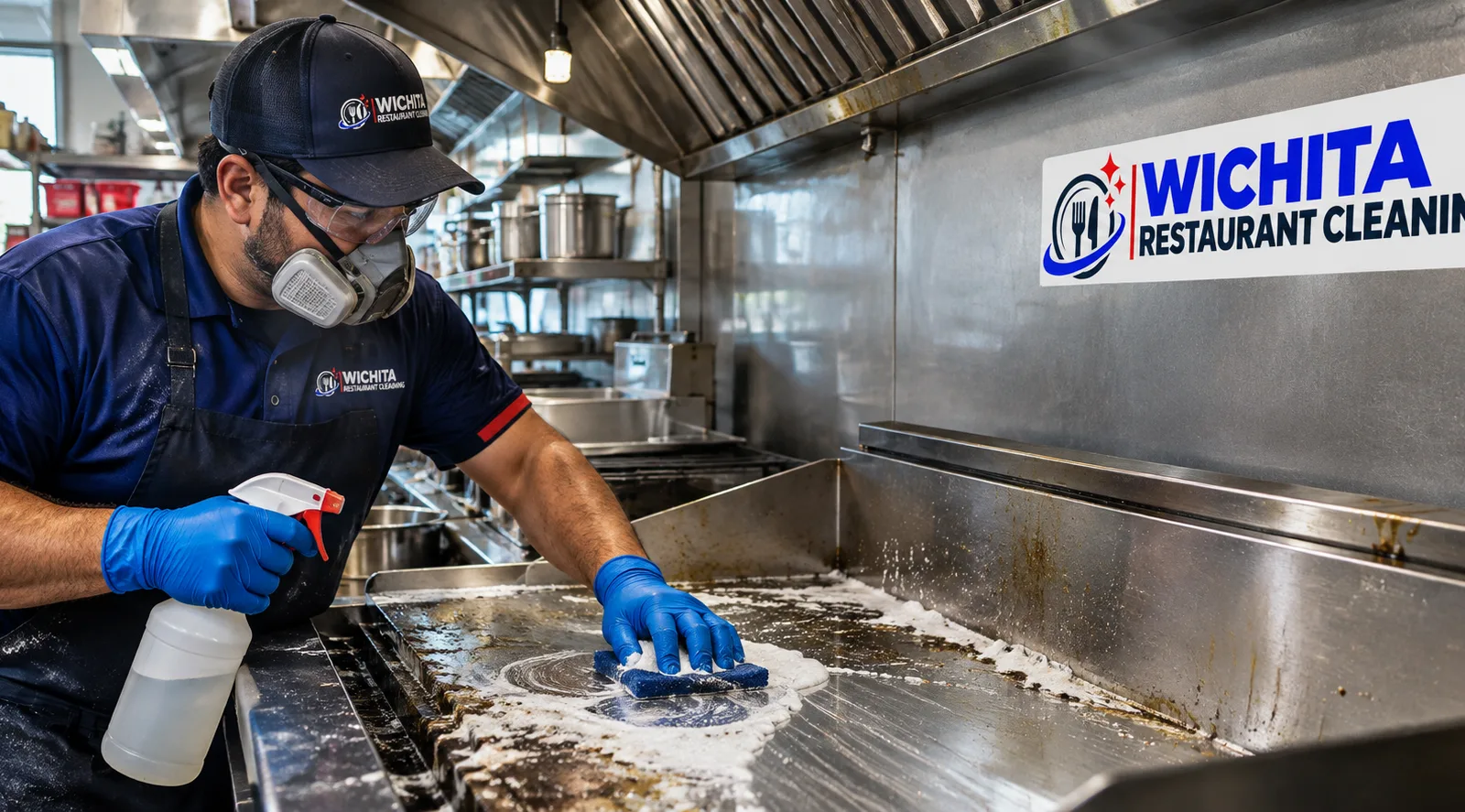
A Cleaner Kitchen Without Disrupting Service
Commercial Kitchen Cleaning Services address the grease, carbon, food residue, and soil that routine closing work may leave behind. Wichita Restaurant Cleaning builds the scope around your equipment, kitchen layout, operating schedule, and problem areas. Work can cover a focused cooking line or a full commercial kitchen deep cleaning.
As an experienced restaurant team in Wichita, KS, we plan work around an active food-service operation. That includes coordinating access, identifying heat-sensitive or electrical components, protecting food-contact surfaces, and allowing cleaned areas to dry before equipment returns to use. Kitchens near Old Town, Rock Road, Bradley Fair, and downtown can each present different access and scheduling constraints.
Professional kitchen cleaning supports the daily work performed by your staff. It does not replace opening and closing sanitation procedures, pest management, equipment repair, or inspections required by the applicable authority. It gives managers a planned way to tackle accumulated residue in places that are difficult to reach during normal service.
Cooking Lines
Degreasing and detailed cleaning around ranges, fryers, griddles, charbroilers, ovens, salamanders, and adjacent stainless-steel surfaces. Equipment is handled according to access and manufacturer limitations.
Kitchen Equipment Cleaning
Exterior and accessible-component cleaning for food-preparation and holding equipment, including racks, carts, worktables, shelving, and removable parts included in the written scope.
Floors, Walls, and Low Areas
Scrubbing for tile, grout lines, washable wall surfaces, base areas, floor edges, and accessible spaces under or behind movable equipment where grease and food debris collect.
Hoods and Accessible Exhaust Surfaces
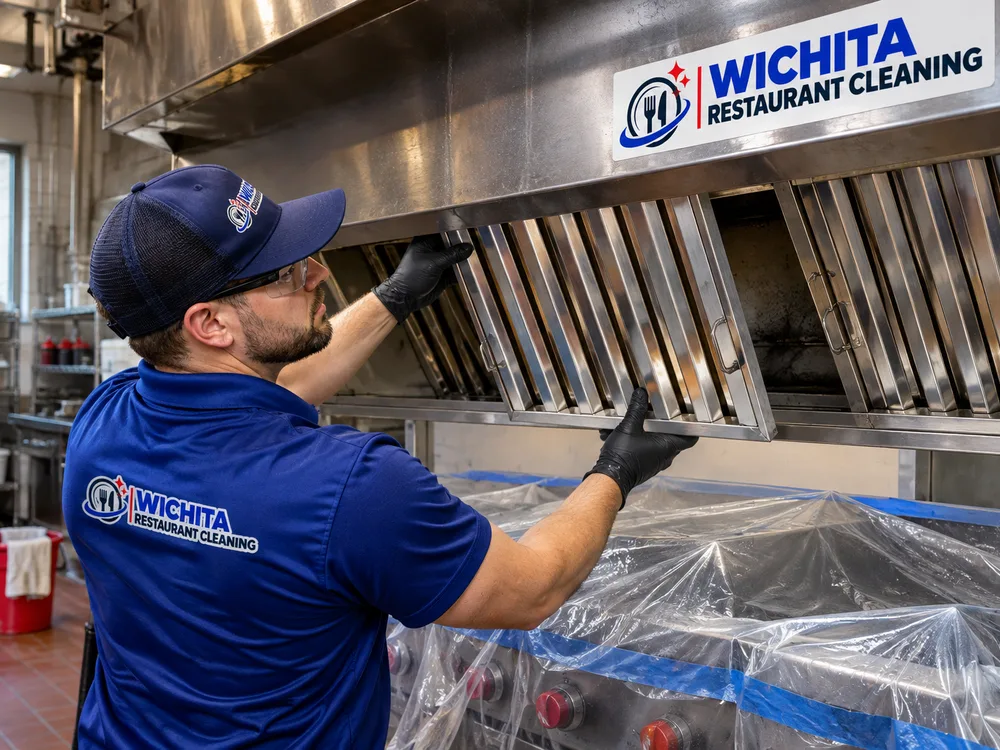
Cleaning of hood exteriors, accessible canopy surfaces, and removable filters when specified. Complete exhaust-system work must be distinguished from general cleaning because ducts and rooftop fans require specialized procedures.
Preparation and Storage Areas
Cleaning for sinks, stainless-steel counters, shelving, dry-storage surfaces, and other nonporous areas, with chemicals selected for the soil and surface.
Focused Problem Areas
Targeted service for stubborn grease buildup, splash zones, corners, casters, equipment sides, and other areas that need more time than routine nightly cleaning allows.
Facility-specific methods
Commercial Kitchen Deep Cleaning Built Around the Facility
A useful scope starts with the kitchen itself. A quick-service cooking line with multiple fryers has different grease patterns than a bakery, commissary, school kitchen, bar and grill, or full-service restaurant. The plan should identify which equipment can be moved, what remains in place, which components may be removed, and who handles utility disconnection when necessary.
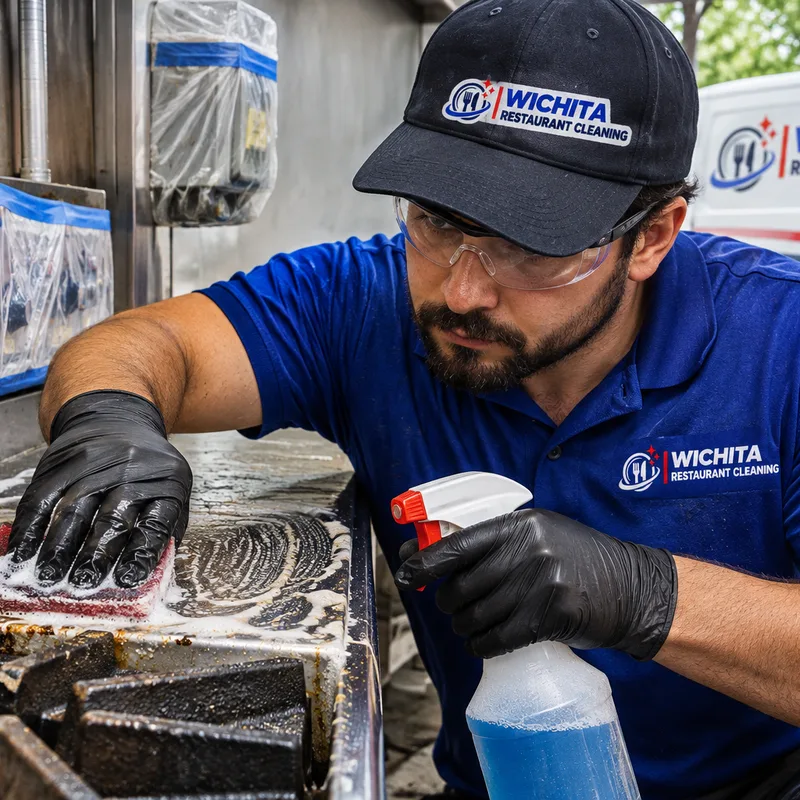
Food and single-use items should be removed or securely protected before cleaning begins. Crews may use scraping, detergent application, agitation, controlled rinsing, wet extraction, and detailed hand cleaning depending on the surface. Alkaline degreasers can work well on heavy fats, but chemical strength and dwell time must match the substrate. Aluminum, painted finishes, control panels, electrical connections, pilot assemblies, and seals require particular care.
Wichita's hot summers and cold winters make indoor staging and drying conditions worth planning. Exterior doors cannot always remain open, and cold-weather work may require more control over ventilation and moisture. A professional kitchen cleaning plan accounts for those conditions rather than relying on one method in every season.
Scheduling process
How Restaurant Kitchen Cleaning Is Planned
Review the Kitchen and Priorities
We discuss the facility, hours, equipment, cleaning history, access restrictions, and problem areas. Photos or an on-site review may be needed.
Define the Work
The written scope identifies included surfaces and equipment, preparation responsibilities, exclusions, and scheduling expectations.
Prepare and Protect
Food and utensils are removed or covered, sensitive components are protected, and shutdown and cool-down requirements are confirmed.
Degrease and Detail
The crew removes debris, applies suitable agents, agitates buildup, and cleans accessible surfaces while controlling residue and wastewater.
Inspect and Reset
Included areas receive a visual review, concerns are documented, and movable items are returned as agreed.
Exhaust scope clarity
Restaurant Hood Cleaning in Wichita, KS
Hood cleaning needs a precise definition. Wiping the visible canopy and cleaning removable baffle filters is different from cleaning the full kitchen exhaust system. Complete exhaust cleaning may include accessible plenum areas, ductwork, access panels, rooftop fans, and grease containment. Those components require suitable access, specialized tools, wastewater control, and documentation.
NFPA 96 is the commonly cited standard for ventilation control and fire protection in commercial cooking operations. Required inspection and cleaning frequency depends on cooking volume, fuel, and operation type. Your fire authority, insurer, equipment documentation, or exhaust specialist may impose additional requirements. A quote should state exactly which exhaust components are included.
General restaurant kitchen cleaners should avoid making fire-system or equipment claims outside their scope. Fusible links, suppression nozzles, fan belts, electrical disconnects, and damaged duct access are matters for qualified specialists. Wichita Restaurant Cleaning can clarify cleaning boundaries before work begins.
Ask What Is Included
Compare companies using a written scope rather than a broad promise to clean the kitchen. Ask which equipment and surfaces are included, whether the crew moves equipment, how electrical and gas-fired components are protected, and what preparation the restaurant must complete. Confirm whether wastewater removal, filter cleaning, floor work, and post-service documentation are part of the price.
Plan Around the Facility
Scheduling matters as much as technique. Equipment may need time to cool before work starts and surfaces may need time to dry before food preparation resumes. Restaurants in Delano can require coordination around mixed-use building access, while larger operations along North Maize Road may have longer cooking lines and more equipment to inspect.
Confirm the Exclusions
Refrigeration interiors, ice machines, suppression systems, duct interiors, rooftop fans, pest contamination, and equipment disassembly may require separate approval or a different contractor. Clear boundaries protect the kitchen operator and the cleaning crew.
Pricing factors
How Much Do Commercial Kitchen Cleaning Services Cost in Wichita?
Commercial kitchen cleaning in Wichita typically ranges from about $500 to $2,500, while large kitchens, heavy restoration cleaning, or specialized exhaust work can cost more. A focused equipment or floor cleaning generally falls near the lower end; a full kitchen with substantial grease buildup requires more labor.
Price changes with kitchen size, soil level, equipment quantity, access, overnight scheduling, required disassembly, and whether hood or exhaust components are included. These are general, nonbinding estimates. Wichita Restaurant Cleaning confirms the exact cost after reviewing the facility, photos, or an on-site inspection.
A written scope makes it easier to compare bids, prepare staff, and schedule cleaning without interfering with food service. Tell us which areas need attention and when the kitchen is available.
Call for a Free QuoteScope and preparation
Commercial Kitchen Cleaning Questions
How long does restaurant kitchen cleaning take?
A focused cleaning may take several hours, while a full kitchen deep clean can require an overnight shift or longer. Kitchen size, grease buildup, equipment temperature, access, and the amount of equipment that can be moved determine the schedule. Wichita restaurants with limited loading access or shared commercial space should allow extra setup time.
Can professional kitchen cleaning be scheduled after closing?
Yes, after-hours and overnight scheduling may be available when arranged in advance. The kitchen must allow enough time for hot equipment to cool, for the crew to complete the agreed scope, and for cleaned areas to dry before preparation resumes. Operating hours and building access are confirmed during scheduling.
Does kitchen equipment cleaning include moving appliances?
Equipment is moved only when the scope, connections, weight, clearances, and site conditions permit it. Hard-connected gas, plumbing, electrical, or ventilation components should be disconnected by qualified personnel when required. The pre-service review identifies what can be moved safely and which areas are accessible without disassembly.
Is restaurant hood cleaning included with a kitchen deep clean?
Hood cleaning is included only when the written scope specifically lists the components being cleaned. Canopy surfaces and removable filters are different from plenums, ducts, access panels, and rooftop fans. Wichita operators should confirm whether they need visible hood cleaning or complete exhaust-system service under the requirements that apply to their facility.
How should a restaurant prepare for commercial kitchen cleaning?
Remove or protect food, utensils, packaging, and portable appliances before the crew arrives. Empty included shelving, identify damaged equipment, cool cooking appliances, and arrange authorized access. The final preparation list depends on the scope and should be shared with the manager before the scheduled work.
How often should a commercial kitchen receive deep cleaning?
The right interval depends on cooking volume, menu, grease production, staffing, and the effectiveness of daily cleaning. Fry-heavy operations may need detailed cleaning more often than low-volume kitchens. Exhaust-system inspection and cleaning follow separate risk-based requirements, so those intervals should not be assumed to match general kitchen cleaning.
Can restaurant kitchen cleaners remove every old stain or damaged finish?
No, cleaning cannot always reverse permanent staining, corrosion, etched metal, failed coatings, or heat damage. A pre-service review helps separate removable soil from material damage. Test cleaning may be appropriate for sensitive or heavily weathered surfaces.
Build your cleaning scope
Plan a Thorough Kitchen Cleaning
Share the kitchen type, equipment, priority areas, and preferred service window. Wichita Restaurant Cleaning will help define a practical scope and identify any preparation needed before work starts.