
Restaurant floor cleaning · Park City
Restaurant Floor Cleaning in Park City
Remove grease, tracked-in soil, and stubborn buildup with a cleaning plan shaped around your flooring, kitchen equipment, and operating schedule.
A Cleaner Floor Without Disrupting Service
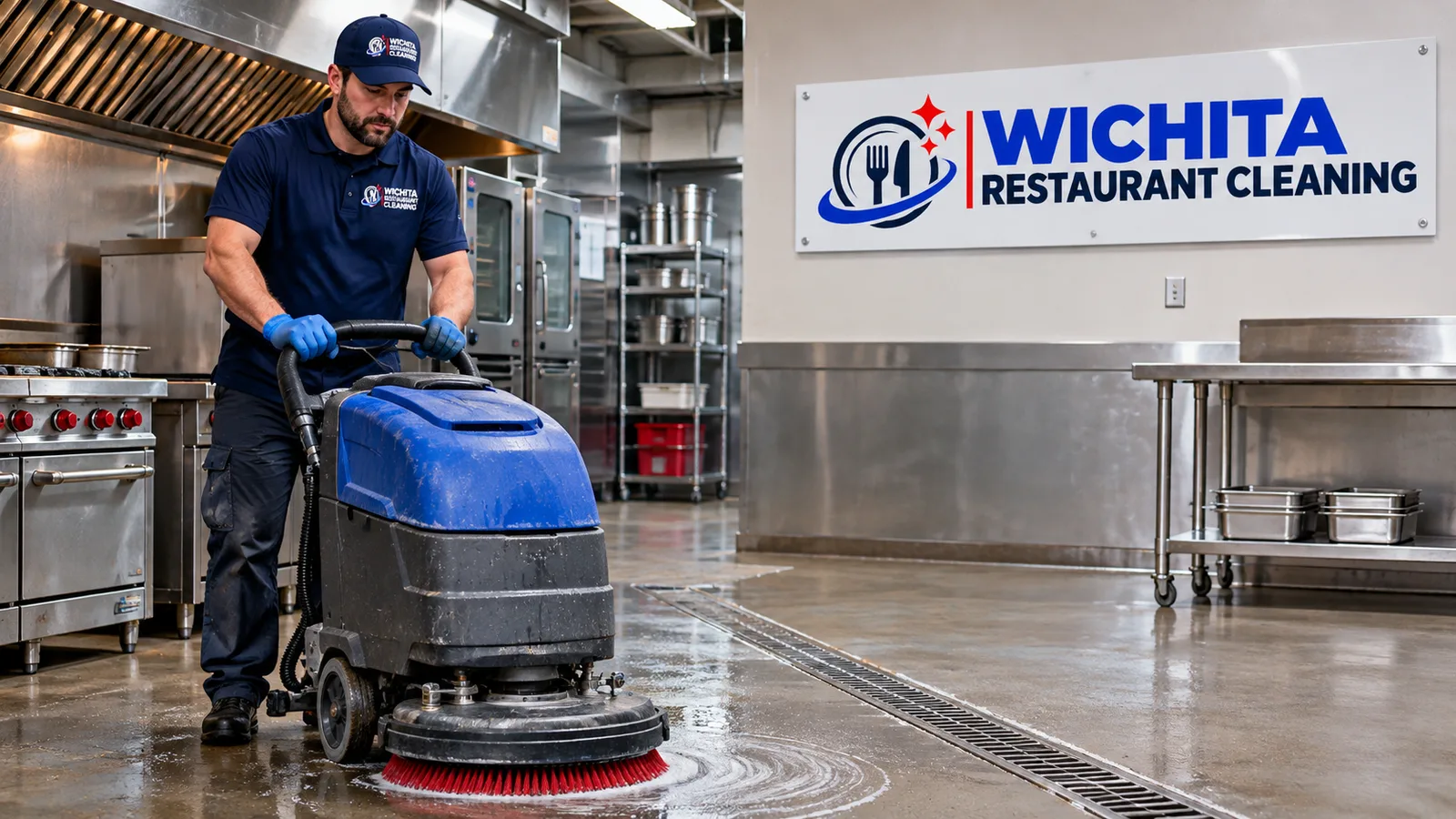
Restaurant Floor Cleaning Park City businesses can schedule around prep, service, deliveries, and closing duties. Wichita Restaurant Cleaning begins by looking at the floor material, soil load, traffic patterns, equipment layout, drains, and problem areas. The resulting scope can cover dining floors, service lanes, cook lines, dish areas, walk-in approaches, storage rooms, and employee work zones.
Our work targets the residue routine mopping often leaves behind. Grease can collect in grout joints, along walls, beneath movable equipment, and around floor drains. Dining areas develop their own mix of food residue, beverage spills, dust, and soil carried in from parking lots. Winter moisture and deicing residue can add to entryway buildup across south-central Kansas. To address these conditions, an experienced restaurant team in Wichita plans the work around restaurant operations and selects methods that match the surface rather than applying one process throughout the building.
Park City restaurants also benefit from a practical maintenance plan after deep cleaning. A clear plan identifies the right chemical dilution, dwell time, agitation method, recovery procedure, and frequency for each zone. That helps the staff maintain the cleaned surface between professional visits.
Deep floor cleaning
Restaurant Kitchen Deep Cleaning in Park City
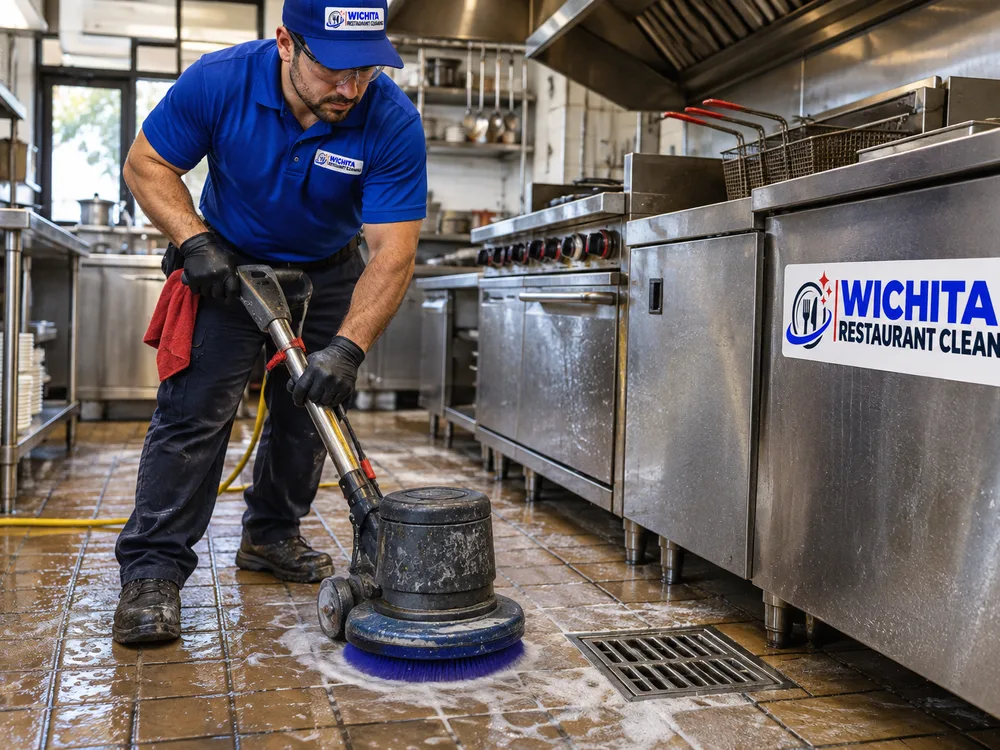
Kitchen floors need more than a quick pass with a mop. Effective deep cleaning starts with dry soil and debris removal, followed by a degreaser selected for the flooring and the type of residue present. The product needs adequate dwell time to loosen buildup. Mechanical agitation then works the solution into textured surfaces and grout lines before the loosened soil is recovered. A clean-water rinse removes remaining chemical and suspended residue.
Edges require separate attention because scrubber decks cannot reach every wall, equipment leg, threshold, or drain perimeter. Technicians may use deck brushes, low-profile tools, or controlled pressure where the floor can tolerate it. Movable equipment can be shifted when access, connections, and the agreed scope permit. Fixed appliances are cleaned around without disturbing gas, water, electrical, refrigeration, or fire-suppression connections.
Floor safety depends on more than appearance. Detergent left behind can create a slick film, while grease hidden in low spots can return to the surface under traffic. Thorough recovery and rinsing are therefore part of the job. Floors should be allowed to dry before employees resume normal movement through the cleaned zone.
Custom cleaning scope
Floor Areas Included in a Custom Cleaning Scope
Cook Lines and Prep Areas
Degreasing focuses on textured flooring, grout joints, equipment edges, corners, and traffic lanes where aerosolized cooking oil and food residue collect.
Dishwashing Zones
The work addresses soap film, food debris, grease, and buildup around sinks, machine approaches, wall edges, and accessible drain perimeters.
Dining Room Floors
Cleaning is adjusted for resilient flooring, sealed concrete, tile, or other installed surfaces. Spot treatment can target beverage residue and food spills before full-floor cleaning.
Entries and Service Lanes
High-traffic routes often carry abrasive grit and moisture farther into the restaurant. Detailed edge work and proper soil recovery help restore a uniform finish.
Walk-In and Storage Approaches
Thresholds and narrow aisles can trap debris around shelving and door tracks. The scope can address accessible floors without interfering with stored food or temperature controls.
Restroom Floors
Separate tools and cleaning procedures help prevent cross-contamination between restrooms, dining spaces, and food-production areas.
Scheduling process
How Restaurant Floor Cleaning Park City Works
Inspect the Floors and Access
We identify flooring materials, heavy-soil zones, damaged grout, loose transitions, drains, fixed equipment, and access limits. Existing damage or surfaces that require special care can be documented before cleaning.
Set the Scope and Schedule
The written scope defines the areas to be cleaned, equipment access, expected preparation, and timing. Work can be planned after closing, before opening, or in controlled zones when the restaurant remains active.
Remove Debris and Pretreat Buildup
Loose debris is removed before an appropriate cleaning solution is applied. Greasy areas, grout lines, edges, and spill spots receive focused treatment with the required dwell time.
Agitate, Recover, and Rinse
Mechanical scrubbing or detailed manual agitation lifts the residue. The dirty solution is recovered rather than spread across the floor, and clean-water rinsing reduces detergent film.
Review the Cleaned Areas
We check edges, corners, traffic lanes, drain surrounds, and other agreed work areas. Any maintenance observations, such as deteriorated grout or a damaged floor transition, can be reported to the restaurant manager.
Surface-specific methods
The Right Method for the Installed Floor
Commercial kitchen floors may include quarry tile, ceramic tile, epoxy systems, sealed concrete, or resilient sheet flooring. Each material has limits. Strong alkaline degreasers can be useful on compatible greasy surfaces, but chemical strength alone does not produce a better result. Product selection, dilution, dwell time, agitation, water temperature, and recovery all matter.
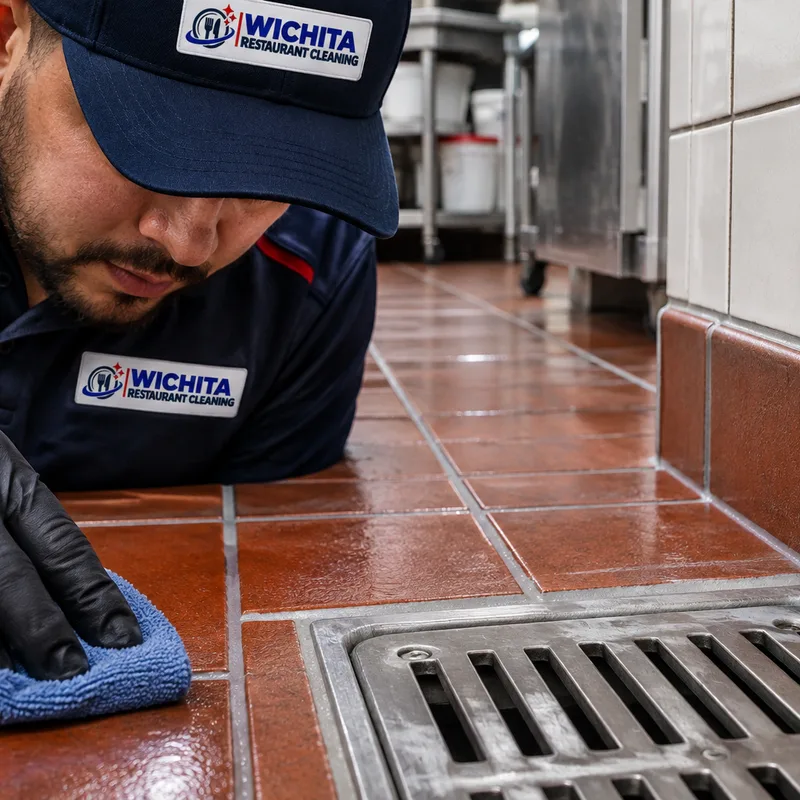
Grouted tile often needs detailed agitation because porous or worn joints can hold dark residue. Epoxy and resinous floors require attention to the coating manufacturer's care guidance, especially when the surface is scratched, peeling, or chemically damaged. Resilient floors may need a lower-impact process to protect seams and finish. Sealed concrete should be checked for coating condition before aggressive scrubbing.
Restaurant equipment also affects the method. Water must be controlled around electrical connections, low-mounted components, stored goods, and areas without suitable drainage. Professional cleaning is not a substitute for repairing failed grout, loose tile, damaged coatings, or drainage problems. An inspection separates removable soil from conditions that require repair.
Park City sits along the Interstate Forty-Five and Interstate One Thirty-Five corridor north of Wichita, where restaurants may serve local residents as well as highway and workday traffic. Cleaning should be arranged around each operation's actual slow periods rather than a generic daytime window. The timing must allow for preparation, cleaning, rinsing, drying, and reopening the work zone safely.
Before the appointment, restaurant staff may be asked to remove floor mats, boxes, small bins, and unsecured items. Food and clean utensils should be protected or moved away from active cleaning. The scope should state who moves mobile racks, prep tables, or other equipment. Technicians should not disconnect fixed appliances or utility connections unless that specialized work has been separately authorized and assigned to a qualified party.
One-time deep cleaning can prepare a floor for an inspection, seasonal reset, management change, or renewed maintenance program. Recurring service is better for kitchens where grease and traffic rebuild quickly. Frequency depends on cooking volume, floor texture, hours of operation, entry conditions, and the quality of daily mopping. Wichita Restaurant Cleaning can use an initial clean to identify which zones need frequent attention and which can follow a longer cycle.
Get a floor-specific scope that accounts for kitchen grease, dining-room traffic, equipment access, and the hours your Park City restaurant can release each work area.
Call for a Free QuoteScope and preparation
Questions About Restaurant Floor Cleaning in Park City
How much does restaurant floor cleaning in Park City cost?
Pricing is usually based on cleanable square footage, floor condition, flooring material, equipment access, and whether the work is one-time or recurring. Heavy grease, detailed grout cleaning, restricted access, and extensive edge work increase labor. A site review allows Wichita Restaurant Cleaning to define the scope and provide pricing based on the actual restaurant.
Can Restaurant Kitchen Deep Cleaning Park City be scheduled after closing?
Yes, restaurant kitchen floor cleaning can be planned outside normal service hours when scheduling allows. The available window must include setup, cleaning, rinsing, recovery, and drying. Park City locations with early breakfast preparation or late-night service may need phased cleaning so each completed zone has enough time to dry.
How long does a restaurant floor deep clean take?
The time depends on floor area, grease load, grout condition, equipment layout, and available access. A compact open kitchen may require a shorter visit than a restaurant with separate cook, dish, storage, and dining zones. The work window is confirmed after the areas and preparation requirements are reviewed.
Do we need to move kitchen equipment before cleaning?
Small movable items and floor mats should generally be removed before work begins, while fixed appliances usually remain connected and in position. The written scope should identify any mobile equipment the restaurant will move and any items the cleaning crew can safely reposition. Gas, electrical, refrigeration, plumbing, and fire-suppression connections should not be disturbed during routine floor cleaning.
Can you remove all grease and dark grout staining?
Deep cleaning can remove substantial surface grease and embedded soil, but permanent discoloration, worn grout, damaged coatings, and absorbed staining may remain. A test area can help distinguish removable buildup from material damage. Failed grout, loose tile, or peeling epoxy requires repair rather than stronger cleaning.
How often should a Park City restaurant schedule professional floor cleaning?
The appropriate interval is based on cooking volume, floor texture, traffic, daily cleaning quality, and how quickly residue returns. A high-output cook line may need professional attention more often than a lightly used dining zone. After the first service, the observed buildup pattern can guide a practical recurring schedule.
Will floor cleaning disrupt food preparation?
Disruption can be reduced by cleaning after service or dividing the restaurant into controlled work zones. Food, utensils, and portable equipment must be protected from moisture and cleaning solution. Staff should stay out of active areas until the floor is rinsed, recovered, and sufficiently dry for normal use.
Build your floor-cleaning scope
Plan a Thorough Restaurant Floor Clean
Describe the flooring, problem areas, operating hours, and access conditions. Wichita Restaurant Cleaning will help define a practical scope for your Park City dining room and kitchen floors.