
Restaurant cleaning · Wichita
Restaurant Cleaning Company in Wichita
Detailed cleaning for commercial kitchens, dining areas, walk-in coolers, and hard-to-reach surfaces, scheduled around your operating hours.
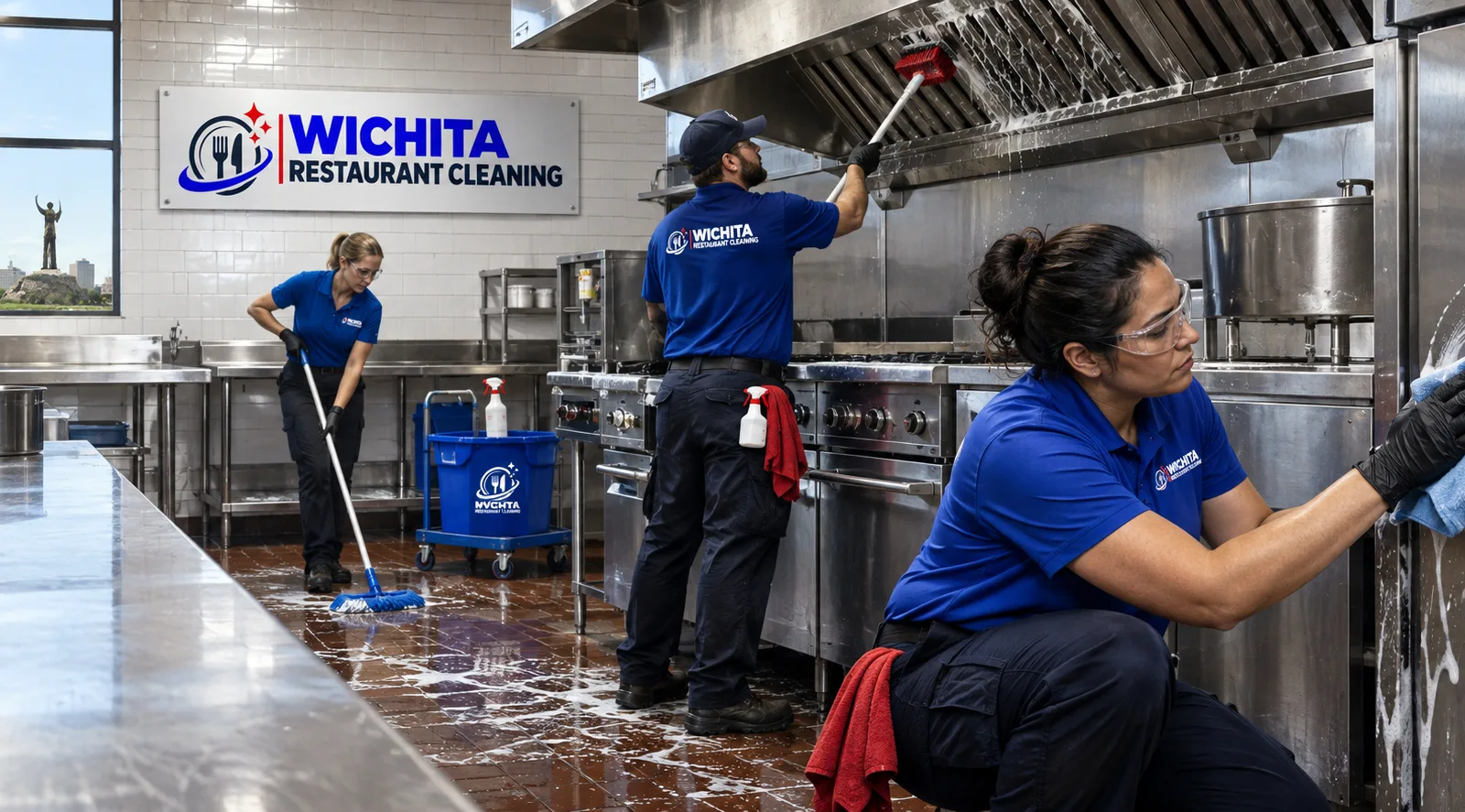
Professional Cleaning Built Around Restaurant Operations
A restaurant cleaning company should understand that a food-service facility cannot be treated like an ordinary office. Grease accumulates behind equipment, food debris collects along floor edges, and vapor carries residue to walls, ceilings, vents, and overhead utilities. Wichita Restaurant Cleaning addresses those conditions with task-specific methods, commercial cleaning products, and a written scope based on the facility.
Our work as a professional restaurant company in Wichita, KS is planned around the areas that need attention, the access available, and your operating schedule. Before cleaning begins, we identify the surfaces involved, discuss equipment movement and access, and confirm which tasks are included. Located on East Central Avenue, we serve restaurants and food-service facilities across Wichita with detailed cleaning that can be arranged as a one-time project or recurring program.
Downtown restaurants may need work coordinated around deliveries, limited service access, and evening activity. Old Town properties often have converted or older commercial spaces where tight equipment layouts and exposed overhead surfaces require careful planning. In Delano, mixed-use buildings can make access and noise control part of the schedule. Restaurants near Bradley Fair may place added emphasis on guest-facing finishes and discreet timing. Each property receives a scope based on its actual layout rather than a generic checklist.
Commercial Kitchen Deep Cleaning
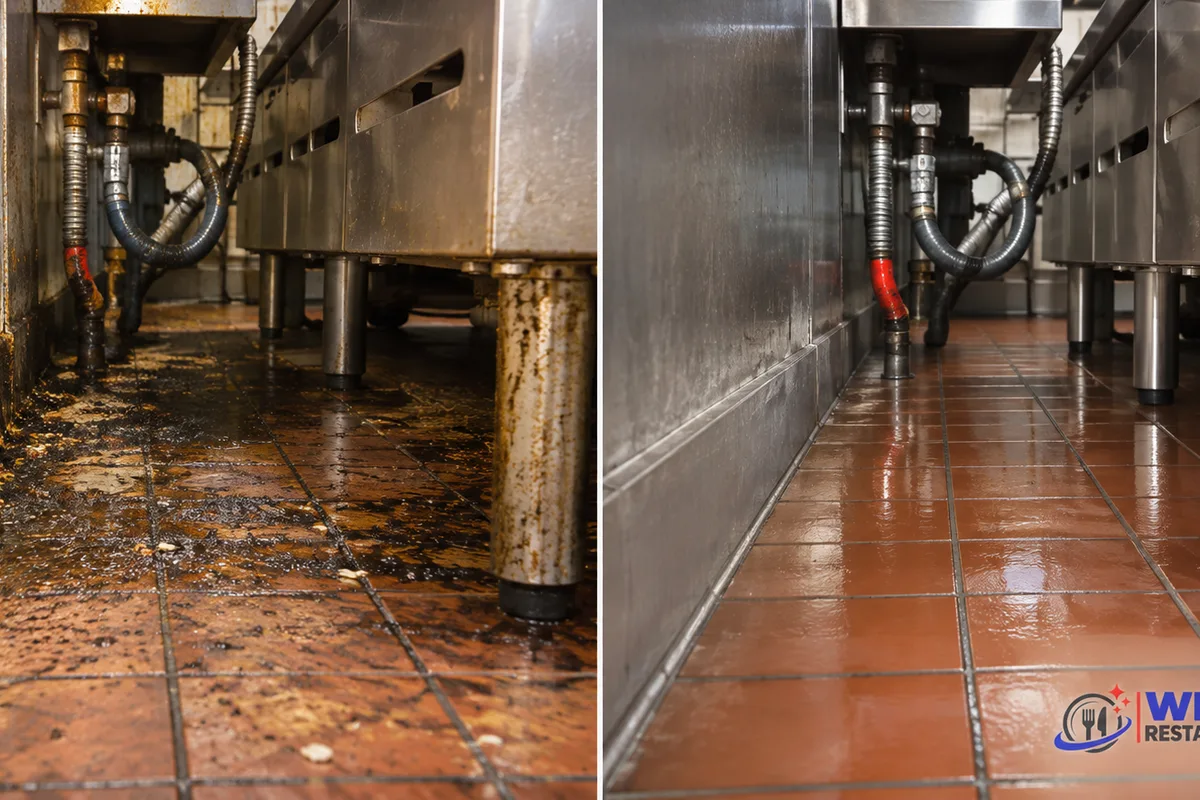
Degreasing and detailed cleaning for floors, walls, washable equipment exteriors, work surfaces, shelving, floor edges, and accessible areas behind or beneath equipment. The scope identifies what can be moved safely and what must remain in place.
Walk-In Cooler Cleaning
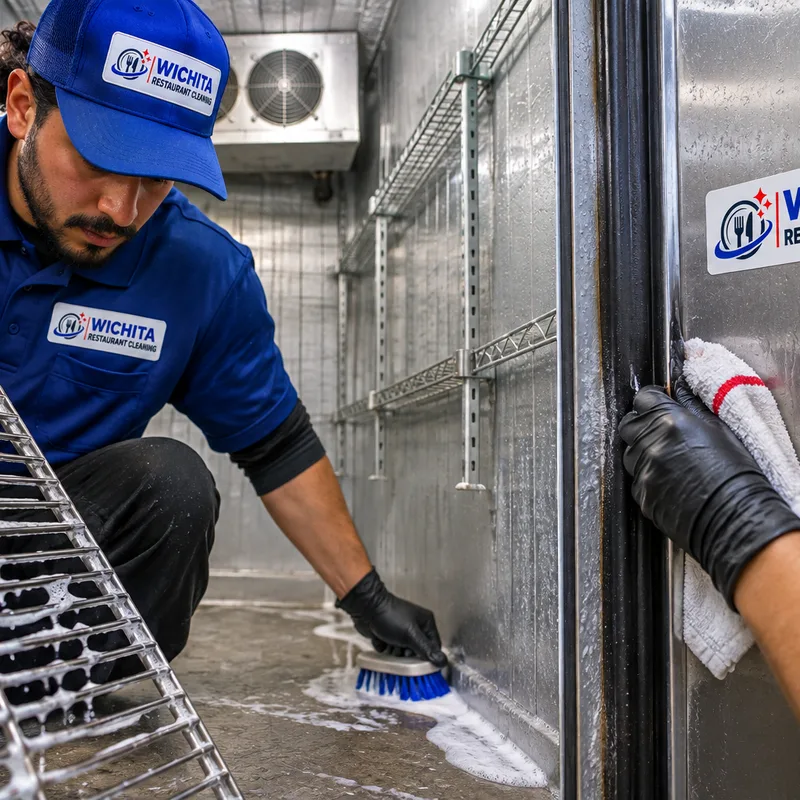
Cleaning for accessible floors, walls, shelving, doors, handles, and gaskets after food is removed or properly protected by restaurant staff. Methods are selected for cold-room conditions and compatible interior surfaces.
High Dusting in Wichita
Removal of dust and residue from accessible ceiling vents, pipes, ledges, light exteriors, beams, and other elevated surfaces. High work is assessed for reach, equipment clearance, and safe access before scheduling.
Dining and Guest Areas
Detailed attention to floors, baseboards, chair and booth surfaces, partitions, washable walls, ledges, and other high-touch areas. Cleaning can be timed to reduce interference with staff preparation and guest service.
Restrooms and Employee Areas
Deep cleaning for fixtures, partitions, floors, wall contact points, break areas, and other designated spaces. The plan separates restroom tools and procedures from those used in kitchen areas.
Opening, Turnover, and Reset Cleaning
Focused restaurant detailed cleaning for a new opening, management transition, seasonal reset, or return to service after approved maintenance work. The final scope is set after the condition and access requirements are reviewed.
Kitchen trouble spots
Kitchen Deep Cleaning That Reaches Common Trouble Spots
Routine closing work handles daily soil, but it rarely provides enough time or access for a full kitchen deep cleaning. A deeper service targets buildup at wall-floor junctions, beneath accessible equipment, around casters and legs, on washable wall surfaces, and along shelving supports. Degreasing requires dwell time, agitation, and extraction or rinsing appropriate to the surface. Applying more chemical is not a substitute for using the right process.
Commercial kitchen deep cleaning in Wichita begins with a review of the production area. The crew confirms hot and cold equipment locations, floor drains, electrical concerns, fragile controls, and any surfaces with special care requirements. Restaurant staff should shut down and cool cooking equipment as agreed, remove exposed food, and identify anything that cannot be moved. Cleaners should never disassemble gas, electrical, refrigeration, or fire-suppression components unless specifically qualified and authorized to do so.
We also keep the boundaries of cleaning work clear. Hood exhaust system inspection, fire-suppression service, pest control, grease-trap pumping, and equipment repair are separate specialist tasks. Visible exterior cleaning may be included when stated in the scope, but it does not replace required technical maintenance or inspections.
Scheduling process
How Our Restaurant Deep Cleaners Plan the Work
Facility Walkthrough
We review the kitchen, dining room, coolers, restrooms, employee spaces, and elevated surfaces included in the request. Access limits, sensitive finishes, equipment condition, and scheduling needs are documented.
Written Scope and Schedule
The plan identifies included tasks, exclusions, preparation responsibilities, and the expected work window. One-time restaurant deep cleaning and recurring programs are scheduled according to the facility's needs.
Restaurant Preparation
Management completes agreed shutdowns, allows hot equipment to cool, secures or removes food, and provides access to designated areas. Any required equipment movement is decided before the crew arrives.
Controlled Deep Cleaning
The crew works through the approved scope using surface-appropriate products, dwell times, agitation tools, and wet-floor controls. Tools and procedures are separated where needed to reduce cross-contamination between restrooms and food areas.
Final Review
Completed areas are checked against the scope, and any access issue or pre-existing condition affecting the work is documented. Management can review the finished areas before the facility returns to its normal setup.
Cold-space cleaning
Walk-In Cooler Cleaning and Cold-Space Details
Walk-in cooler cleaning requires preparation because food safety, condensation, and continuous refrigeration affect the work. Restaurant staff should relocate or protect food according to their own handling procedures and maintain required holding temperatures. Cleaning can then address accessible shelving, interior walls, floors, door surfaces, handles, and gaskets included in the scope.
The crew selects products compatible with washable cooler materials and avoids flooding electrical components, fan housings, controls, and refrigeration equipment. Door gaskets need gentle cleaning because aggressive tools can damage the seal. Standing water should be removed promptly, and the area should be dry enough for safe use before items are returned.
Mold-like growth, damaged insulation, a failing door seal, persistent water intrusion, or a refrigeration problem may require evaluation by the appropriate specialist. Professional restaurant deep cleaning removes accessible soil; it does not correct mechanical defects or guarantee remediation of hidden contamination.
Clear cleaning boundaries
What Makes a Restaurant Detailed Cleaning Scope Useful?
A useful scope names the rooms, surfaces, and limits of the work. Broad phrases such as “clean the kitchen” leave too much open to interpretation. A detailed proposal should state whether the work includes equipment exteriors, accessible areas beneath equipment, walls, shelving, floor edges, drains, cooler interiors, dining areas, restrooms, or high dusting. It should also identify items that remain excluded.
Condition affects the labor plan. Heavy polymerized grease, crowded storage, limited equipment clearance, adhesive residue, and delicate finishes take more time than ordinary soil. Elevated work may require ladders or other access equipment, while tight production lines may need cleaning in stages. Wichita's hot summers can increase the importance of coordinating kitchen shutdowns and ventilation so employees and cleaning crews are not working around active heat-producing equipment.
Scheduling matters as much as the checklist. Some facilities need an overnight project, while others prefer a planned closure or work divided across several visits. Recurring service can keep lower-access and overhead areas from reaching the condition that triggers a major reset. The right frequency depends on cooking volume, menu, ventilation, floor type, and what the in-house team already handles.
Pricing factors
How Much Does Restaurant Deep Cleaning Cost in Wichita?
Restaurant deep cleaning in Wichita typically ranges from about $500 to $2,500 for a defined one-time project, while large kitchens, heavy grease buildup, extensive high dusting, or multi-area work may cost more. Smaller targeted jobs, such as an emptied walk-in cooler or limited prep area, may fall below that range.
Final pricing depends on square footage, soil level, equipment access, surface type, required crew time, scheduling, and preparation. A walkthrough allows the included work and exclusions to be documented. The exact cost is confirmed after the facility inspection and scope review.
A clear walkthrough and written scope make it easier to plan the work around food handling, equipment shutdowns, staff access, and reopening.
Call for a Free QuoteScope and preparation
Questions About Restaurant Deep Cleaning in Wichita
How long does restaurant deep cleaning take?
A targeted area may take several hours, while a full kitchen and supporting spaces may require an overnight window or staged visits. Timing depends on grease buildup, square footage, equipment access, high dusting requirements, and how much preparation is complete before arrival. Wichita restaurants with tight delivery access or mixed-use neighbors may also need a carefully defined work window.
Can cleaning be scheduled when the restaurant is closed?
Yes, work can be planned outside service hours when crew availability and the scope permit. After-hours scheduling is often practical for kitchens because cooking equipment can be shut down and cooled, food can be secured, and wet floors can dry before staff return. The agreed access and reopening time should be documented before work begins.
Do we need to remove food before walk-in cooler cleaning?
Food must be removed or protected under the restaurant's approved handling procedures before interior cooler surfaces are cleaned. Management remains responsible for safe storage and required holding temperatures. Shelving may also need to be cleared so the crew can reach walls, supports, floor edges, doors, and gaskets.
Does commercial kitchen deep cleaning include moving equipment?
Light movable items may be repositioned when agreed in advance, but heavy, connected, unstable, or hot equipment generally requires restaurant staff or a qualified equipment professional. Gas lines, electrical connections, refrigeration lines, and fire-suppression components should not be disturbed by a general cleaning crew. The walkthrough identifies which areas will be accessible.
Is high dusting safe around a commercial kitchen?
High dusting can be completed safely when food is protected, production has stopped, and suitable access equipment can be used. Ceiling vents, ledges, pipes, beams, and light exteriors are assessed for height, stability, and nearby equipment. High Dusting Wichita projects may be scheduled separately when overhead residue is extensive.
Can you clean around the hood and cooking line?
Accessible exterior surfaces around a cooled cooking line can be included in the written scope, but certified hood exhaust cleaning, fire-suppression work, and mechanical service are separate tasks. The restaurant should confirm which specialist maintains those systems. Cleaning boundaries are documented before the project starts.
How often should a restaurant schedule professional deep cleaning?
The right interval depends on cooking volume, grease production, ventilation, floor condition, storage practices, and the daily cleaning program. A high-output kitchen may need selected areas addressed more often than a low-volume operation. After an initial deep clean, the condition of floors, wall edges, equipment gaps, coolers, and overhead surfaces can guide a practical recurring schedule.
Define the work before scheduling
Plan a Cleaner, More Manageable Restaurant Reset
Tell Wichita Restaurant Cleaning which areas need attention, when the facility is available, and what your staff already handles. We will help define a practical scope for the kitchen, cooler, dining areas, or high surfaces before work is scheduled.